
Conventional transparent LED
Review cabinet or bar structure, hanging points, sightlines and service access.
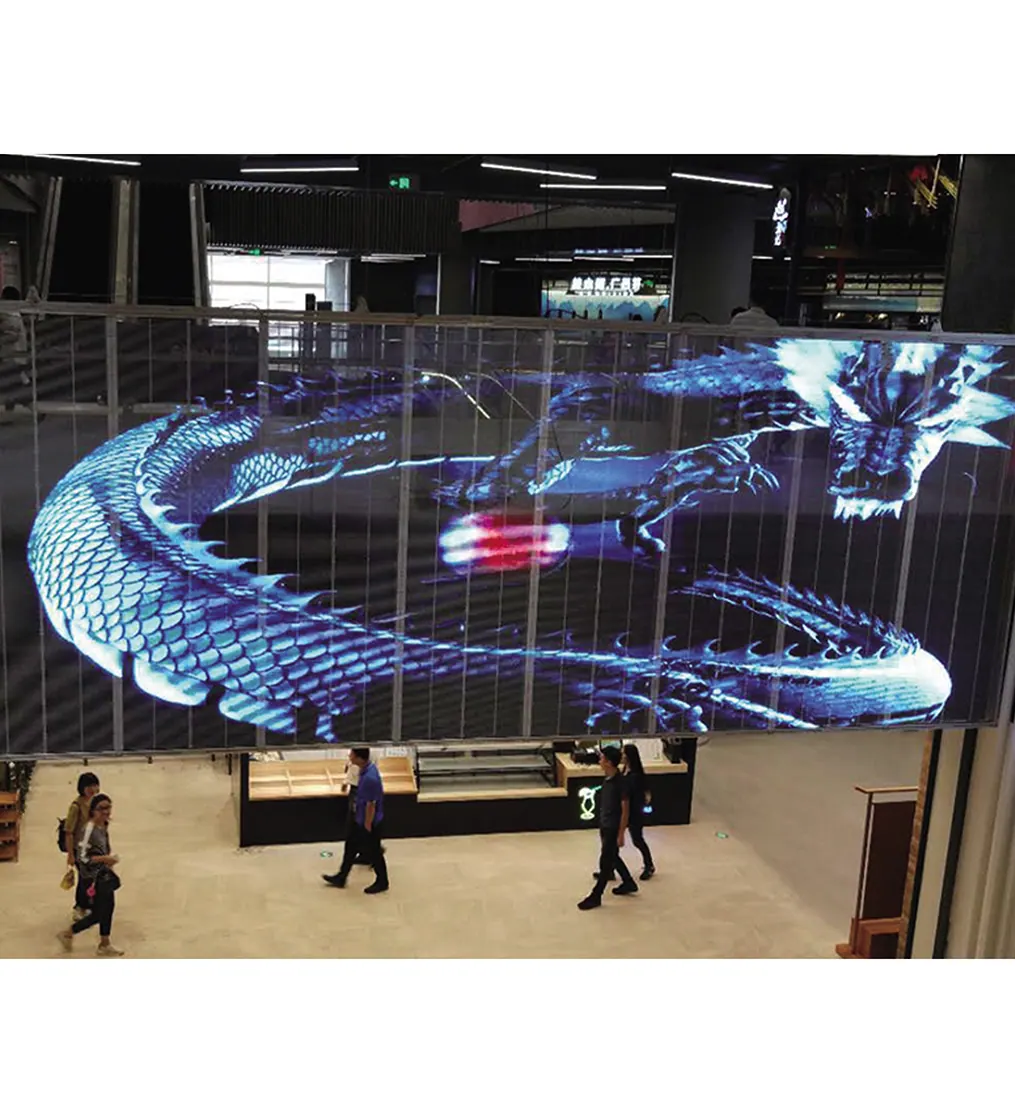
Transparent, holographic and LED film display
See-through display projects balance transparency, visual impact, glass conditions, structural spacing, cable routes and viewing direction. Transparent mesh, holographic-style and LED film formats should be compared against the actual site rather than treated as one identical product.
Application, approximate screen size and destination are enough for an initial review.
Display format reference image
Product visuals
Review display form, structure and applications through the image gallery and video previews.


Video previews
Photographs, product images and a digital concept illustrate transparent displays. Mounting details depend on the selected series.
Product directions
Use these directions to organize the project brief. Final configuration depends on the selected LED display, site and confirmed order.
Review cabinet or bar structure, hanging points, sightlines and service access.
Compare fine transparent structure, viewing direction, content style and the visual effect at the intended distance.
Confirm glass dimensions, attachment conditions, cable routes, power position and replacement method.
Plan quick assembly, structural visibility, daylight and content with deliberate transparent areas.
Configuration
These questions help match a display series to the project. Final values depend on the selected product and site conditions.
Compare transparent panel, fine see-through and film-mounted directions.
Confirm glazing dimensions, support and fixing restrictions.
Identify indoor, outdoor or two-sided viewing positions.
Plan contrast and open areas so the intended view-through effect remains.
Review sunlight, reflections and night-time surroundings.
Locate power, data and safe replacement access.
Send the application and approximate screen size to request data for a suitable series.
Request a Matching Data Sheet →Manufacturer review
A finished specification is not required for the first product review.
Before configuration
Clear inputs make the proposed LED display, included scope and quotation easier to compare.
Confirm whether visitors view from inside, outside or both.
Share mullions, panel sizes, fixing restrictions and access conditions.
Document direct sunlight and night-time reflections at the site.
Use high-contrast content with deliberate transparent regions.
Buyer FAQ
These answers help prepare a clearer request for quotation. Model-specific values are confirmed in the quotation and matching product information.
No. Every product retains visible structure or light-emitting elements. Perceived transparency depends on the selected format, content and viewing conditions.
Some film-format products are intended for glass-side installation, but the glass condition, dimensions, cable route and approved attachment method must be confirmed for the selected product.
Simple high-contrast motion and deliberate empty areas generally communicate more clearly than dense layouts.
Start with a rough project brief
Share the application, approximate width and height, viewing distance, installation environment and destination. Detailed drawings are helpful but not required for the first reply.