
Corner façade
Confirm the viewing direction, corner angle, cabinet transition and content canvas.
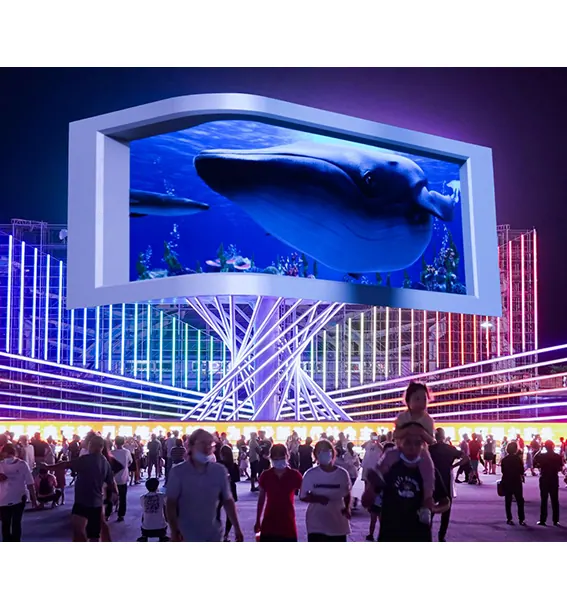
Outdoor naked-eye 3D LED display
Naked-eye 3D projects combine an outdoor LED display, suitable corner or curved geometry and perspective content prepared for a defined viewing zone. Structure, weather exposure, service access and media production must be coordinated together.
Application, approximate screen size and destination are enough for an initial review.
Display format reference image
Product visuals
Review display form, structure and applications through the image gallery and video previews.


Video previews
Product images and a digital concept illustrate outdoor display arrangements. Final structure and content depend on the site.
Product directions
Use these directions to organize the project brief. Final configuration depends on the selected LED display, site and confirmed order.
Confirm the viewing direction, corner angle, cabinet transition and content canvas.
Define radius, structure, module arrangement and the intended audience zone.
Prepare the visual for the approved geometry and primary viewing position; the effect changes outside that zone.
Coordinate structure, weather exposure, power, signal and service access before finalizing the screen layout.
Configuration
These questions help match a display series to the project. Final values depend on the selected product and site conditions.
Measure corner angle, curve radius or façade planes.
Identify the primary street-level audience position.
Prepare perspective media for the final geometry and viewing point.
Review service direction, structure and weather exposure.
Define ambient light and brightness-control requirements.
Coordinate cable routes, ventilation and maintenance access.
Send the application and approximate screen size to request data for a suitable series.
Request a Matching Data Sheet →Manufacturer review
A finished specification is not required for the first product review.
Before configuration
Clear inputs make the proposed LED display, included scope and quotation easier to compare.
Confirm wall dimensions, load path, access and nearby obstructions.
Review rainfall, direct sun, temperature range and ventilation strategy.
Plan distribution, cable distance, grounding and control-room position.
Keep module, power and receiving-card replacement accessible after installation.
Buyer FAQ
These answers help prepare a clearer request for quotation. Model-specific values are confirmed in the quotation and matching product information.
No. The effect depends on screen geometry, a planned viewing zone and perspective content prepared for that installation.
Wall drawings, photos, screen size, corner or curve geometry, viewing direction, installation height, access and destination are useful starting points.
Content scope should be agreed for each project. The media team needs the approved screen geometry and viewing point before final production.
Start with a rough project brief
Share the application, approximate width and height, viewing distance, installation environment and destination. Detailed drawings are helpful but not required for the first reply.