
Quick answer: Start a meeting-room LED display brief with the nearest regular viewer, wall dimensions, content sources, room lighting, camera use and service access. Compare pixel pitches and cabinet formats only after these conditions are clear. A catalog model is a reference point, not a room-specific recommendation.
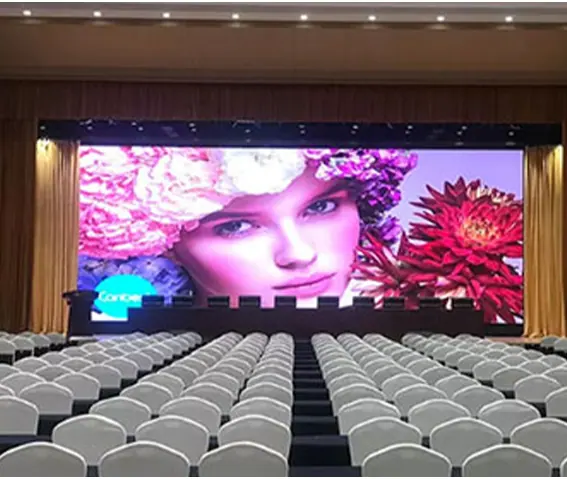
Seven questions to answer before comparing models
1. Where is the nearest regular viewer?
Measure the closest normal seat, not only the distance from the back row. Also note whether people read small text, spreadsheets or control data, or mainly view presentation graphics and video. These details help narrow the display resolution and pixel-pitch direction.
2. What content will the screen show?
List common sources such as laptops, video-conference systems, cameras and control feeds. Record the output formats and whether several sources appear at once. The screen layout, processor and content canvas should be discussed together.
3. What space is actually available?
Share the finished wall opening, ceiling height, room width and any doors, joinery or acoustic treatment around the display. A cabinet dimension in a catalog does not by itself establish the final visible screen size or the space needed for structure, power, ventilation and access.
4. How will the room be lit?
Describe daylight, window positions, reflections and normal dimming scenes. Brightness should be selected for the actual room and operating conditions rather than copied from a generic product table.
5. Will the display appear on camera?
If the room is used for hybrid meetings or recording, provide the camera positions, frame rates and typical lighting. Ask for a playback and camera check with the proposed display configuration before the system is finalized.
6. How will the screen be installed and serviced?
Confirm the wall structure, fixing restrictions, power and data routes, and whether service access must be from the front. The selected cabinet and installation details need to match those constraints. Plan replacement access before wall finishes are closed.
7. Who will operate the system?
Identify the person or team responsible for source switching, daily start-up, content updates and basic checks. Include training, documentation and spare-part expectations in the project scope.
How to read an indoor fixed LED model table
The following three rows are examples from one indoor fixed-display series in the supplied 2026 group product catalog. They show how cabinet resolution changes across listed pixel pitches; they do not establish which model suits a specific meeting room.
| Catalog model | Cabinet size | Cabinet resolution |
|---|---|---|
| P1.25 | 640 × 480 mm | 512 × 384 px |
| P1.53 | 640 × 480 mm | 416 × 312 px |
| P1.86 | 640 × 480 mm | 344 × 258 px |
Source: MVP LED 2026 Digital Catalog, p. 9, supplied as group product material. These are catalog reference configurations for the listed indoor fixed series. Confirm final model data, service method and commercial scope against the selected series and quotation. The indoor full-color LED display page shows the wider reference table and its source note.
What to send for an initial proposal
A useful first brief can be short: room plan or wall dimensions, closest seat distance, main content types, lighting conditions, camera use, installation restrictions, destination and target schedule. Drawings and photos help, but the first discussion can begin without a finalized AV design. For the broader workflow, see the corporate and conference application guide and the LED display buyer guide.
Common questions
Is the smallest pixel pitch automatically the right choice?
No. The nearest viewer, text detail, content sources, screen area, room conditions and budget all matter. Compare the complete proposed system rather than a pitch label alone.
Can one cabinet specification determine the whole screen?
No. Cabinet figures describe a reference component. Final screen dimensions, structure, power, control and service access depend on the approved layout and selected product series.
What should be checked before a quotation becomes an order?
Confirm the final model sheet, drawings, visible screen size, source and control workflow, installation and service method, and any camera requirements. These details should match the written quotation and project scope.